
Businesses Stepping up for Democracy: Ep. 3
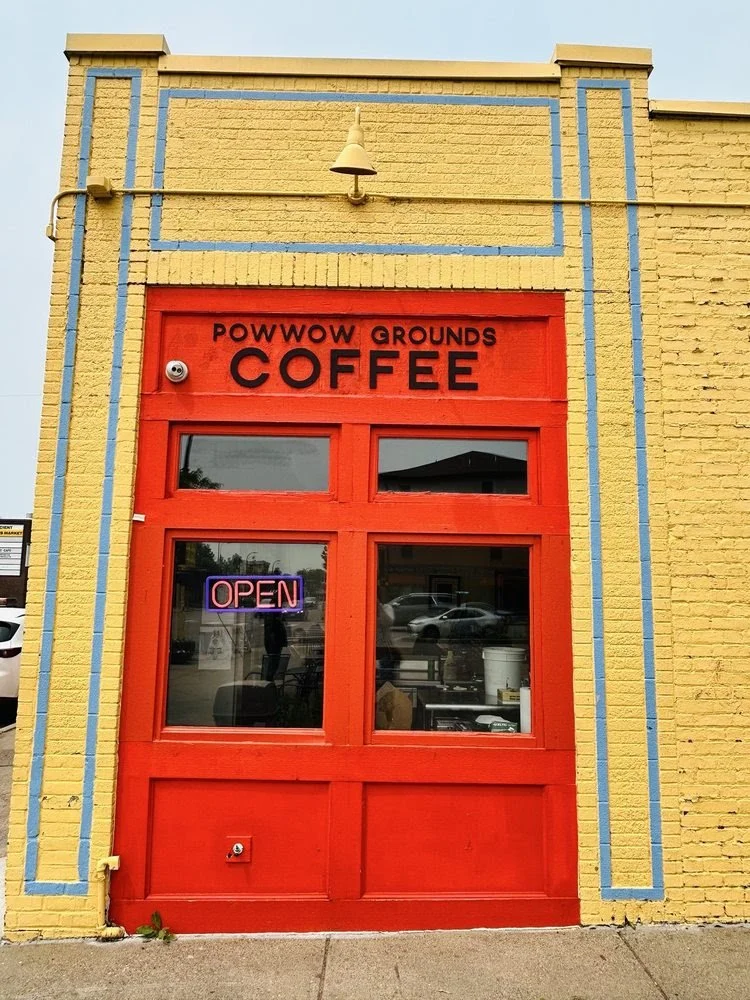
Tapping into an intergenerational blueprint of mutual aid
Pow Wow Grounds, a Native-led coffee shop, was uniquely ready to step up in this moment.
When ICE presence intensified in Minneapolis earlier this year, Pow Wow Grounds didn't need to start from scratch in figuring out what to do. They had a blueprint to build on—from 2020, and from traditions that date back generations. Stepping up in such moments is part of their community’s history and legacy.
The Native-owned coffee shop, which opened in 2011 on Franklin Avenue, is in the heart of the urban Native community in Minneapolis. Over the years, it has expanded from a single coffee shop to include catering services and a food truck called Frybread Factory.
After George Floyd's murder in 2020, as Minneapolis erupted and threats mounted against Native and Somali businesses, Pow Wow Grounds became what Winona Vizenor, who manages the coffee shop, calls “a hub in the community.”
When many small businesses were closing in 2020, her uncle, Robert Rice, a member of the White Earth Nation and owner of the coffee shop, opened its doors. Members of the American Indian Movement and other community members kept watch through the nights, protecting businesses from looting and violence. Pow Wow Grounds became a food bank, feeding neighbors from the Little Earth community (a nearby housing development).
“The Native community has been doing this sort of mutual aid and organizational work for generations, including with the founding of the American Indian Movement in the sixties, out of necessity of protecting our community,” Winona explained. When ICE agents arrived in Minneapolis in 2026, that decades-long history of self-organizing for community care and justice snapped into action again. “We all kind of came together and jumped right back into the work that we did in 2020.”
Once again, Pow Wow Grounds transformed into a community hub: accepting donations, providing protective gear to protesters and observers, offering free soup and coffee daily, extending hours and staffing up (without overworking employees during an emotionally-fraught time), and becoming a safe space for everyone—Native and non-Native alike.
Every day for the past several weeks, the phone on Pow Wow Grounds’ counter has been ringing almost constantly. On their social media, messages flood in from across the country and even around the world. “It's people all over the country and sometimes we get international phone calls or messages of people just reaching out with kind words and asking how to help,” she said, with emotion in her voice. “The world is watching.”
The donations have exceeded their expectations, enabling them to share the abundance with other mutual aid organizations, families in need, groups working with homeless communities, and organizations supporting high school students. “That in itself is what keeps me going personally,” Winona shared, speaking about the coordination with and among all these community groups. “I can't be a frontliner. You know, I'm a mom. And so this is my small role that I can play to do something.”
But Winona’s role is anything but small. It requires bravery (as ICE has been infiltrating mutual aid sites, forcing Pow Wow Grounds to develop vetting processes for volunteers), a deep well of emotional fortitude, not only in the face of injustice and brutality impacting the community, but also in fielding the outpouring of well-wishes, which can be emotionally overwhelming even as it boosts the team’s spirits (“I'm going to cry even just thinking about it. I cry every day,” Winona said), and operational excellence to manage extended hours, volunteers, a food truck, and boxes and boxes of food.
Lessons for pro-democracy businesses
For other businesses considering how to respond in their communities, Pow Wow Grounds serves as a model:
Start small and adapt: Winona and the team focused on just starting and making iterative adaptations along the way. “At the beginning, we're just like, hey, we need to get some things to fuel protesters and observers in the community and people who are afraid to leave their homes. And as the weeks have gone on, we've just gotten more organized and have adjusted and readjusted and how we operate is just getting more and more organized as weeks go on and we're just kind of learning as we go.”
Understand and work within your capacity limits: Past experience had taught the Pow Wow team the complexity of accepting and redistributing perishable food. “We knew that we did not have the capacity to be a full food bank with perishable foods again, that we could handle non-perishable foods. It's easier to manage,” Winona said. In moments of crisis, it’s tempting to say yes to everything. But equally important is knowing what you cannot do and designing around that.
Create an informal coalition structure: Pow Wow operates through an “unofficial board” model—bringing together leaders and organizers from different groups—to make collective decision-making and shoulder the shared responsibility of leadership. “It's building a broader community and collaboration,” Winona shared. “And that is so, so, so important to do if you're gonna step into any sort of mutual aid work to serve your community is building connections and I guess a larger sense of community with other local groups and businesses.”
Contribute to the greater mutual aid and resistance infrastructure: Winona and her team redistribute overflow food to other organizations. This requires enduring relationships and an awareness of the multiple hubs and spokes in the mutual aid ecosystem in Minneapolis. It also requires an understanding of where other organizations, people, or communities are better positioned to help: “If there are needs you can't address, that collaboration and that community building can help find another business who could meet the needs you couldn't. It really is about collaboration at the end of the day,” she said.
"I think for us, it was …natural, like all of this kind of naturally …comes to us," Winona reflected. This is what happens when mutual aid and accountability for community care are part of a business’s DNA from its start—when its leadership and team members bring a blueprint for stepping up in this way that has been passed down for generations.
Pro Democracy Business in the News
Community organizations and residents across Minneapolis are showing up for their local business community. One neighborhood organization launched a campaign dubbed Show Up for Eat Street to support businesses on Eat Street, the popular business corridor in Minneapolis's Whittier neighborhood where Alex Pretti was shot.
Minnesota Governor Tim Walz said that he’ll back a $10M aid package to support state businesses, especially immigrant-owned businesses, hurt by the surge of federal immigration agents (as this article in The New York Times highlighted).
Can businesses ban ICE from their stores? An article in the Huffington Post features legal experts who break it down.
Minnesota’s cooperatives and mutual aid organizations are stepping up, building power, and supporting their community in a time of political repression.
